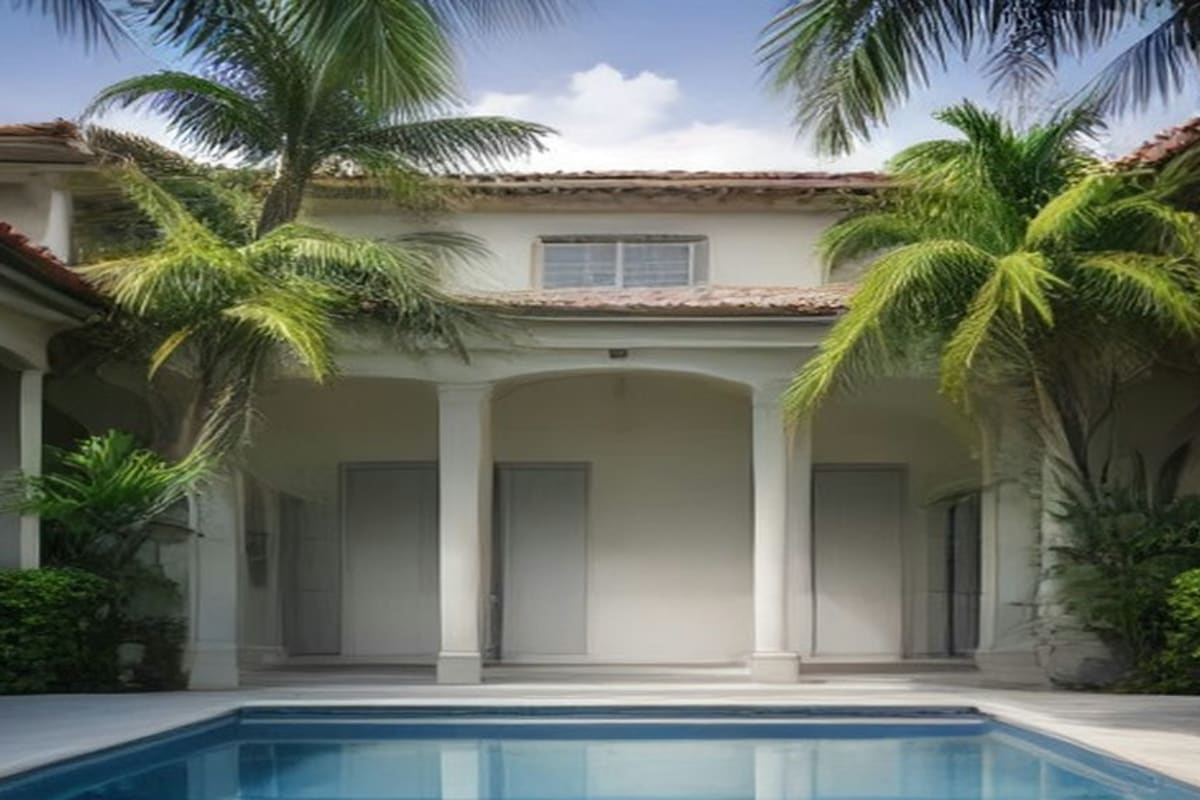
Before you fall for a sunset view over a Boca Raton lake or waterway, here's what western exposure actually means for comfort, energy bills, and resale.
There is a moment that happens on almost every showing I do of a west-facing home in South Florida. The buyer walks through the back sliding doors, sees the water, sees the sky beginning to warm toward orange, and says something like, "I want this." I understand the feeling completely. I also know what comes next — and my job is to make sure they do, too.
Western exposure is one of the most consequential orientation decisions in South Florida real estate. It is also one of the most misunderstood. The sunset is real. So is everything else.
What "Western Exposure" Actually Means Here
South Florida sits between roughly 25° and 27° north latitude. That geography means the afternoon sun does not dip gently — it drives hard and low from the southwest in winter and more directly west through summer. A home with its primary living areas and glass facing west absorbs that radiation for the better part of five to six hours each afternoon. On a July day in Boca Raton, that is not a poetic inconvenience. It is a structural thermal challenge.
The implications land in three places: how the home feels to live in daily, what it costs to keep comfortable, and what a future buyer will think when they come to evaluate it years from now.
Livability: The Hours You Actually Use the Home
I ask every buyer the same question early in our process: when are you actually in this house? If the answer is mornings — coffee on the terrace, breakfast, then off to work or the club — western exposure may cost you very little in daily quality of life. The house is at its best when you're in it.
But if this is a primary residence, or a home where afternoons matter — where children come home from school, where you work remotely, where you entertain on Sundays — then the western wall of glass changes the calculus. Rooms flood with direct light from roughly 1 p.m. onward. Glare makes screens difficult. Heat radiates through impact glass even when the glass itself is top-rated. The living room that felt serene at 10 a.m. during the showing is a different room at 4 p.m. in August.
In communities like Royal Palm Yacht & Country Club or along the Intracoastal properties I work with in Highland Beach, west-facing rear exposures often front canals or the waterway itself. The view justifies real trade-offs for many buyers. The point is to make that trade-off consciously, not discover it after closing.
Energy Costs and What Good Construction Can — and Cannot — Fix
Modern high-performance impact windows have transformed how west-facing homes perform compared to even fifteen years ago. Low-emissivity coatings, laminated glass, and insulated frames do meaningful work. But no window eliminates solar heat gain entirely; it manages it. The home's HVAC system compensates for what the glass does not block.
When I evaluate a west-facing home with a buyer, I look at the HVAC system's age and capacity, the presence and depth of roof overhangs, and whether the builder or a previous owner added any architectural shading — a pergola, a deep lanai roof, motorized exterior shades. These are not cosmetic details. A deep covered lanai on a west-facing home in The Oaks at Boca Raton is doing real thermal work. A flush glass wall with no overhang is doing none.
Ask for at least twelve months of utility bills. Patterns matter more than any single number.
The Sunset View: Pricing It Honestly
Sellers and their agents price western water views at a premium, and often rightly so. A sunset over a lake in Boca Falls or across the Intracoastal in Delray Beach is genuinely valuable. The question I work through with buyers is whether that premium is proportionate to what they're actually getting — and what they're taking on.
A view is an amenity. Orientation is a permanent physical condition of the property.
Those are different things, and they should be weighted differently. When resale comes — and it always comes — the next buyer will ask the same questions. A home that has been well-maintained, where the HVAC is right-sized, where window treatments and shading are thoughtful, will answer those questions well. A home that has been fought against for a decade will show it.
What to Ask Before You Make an Offer
Walk the home between 2 and 5 p.m. on a clear day if at all possible. Sit in the primary living area. Sit in the primary bedroom. Notice where the light lands and how the room temperature compares to what you felt in the shaded entry. Ask about the window specifications — the SHGC rating (solar heat gain coefficient) is the number that matters most. Ask about the roof age and the insulation value in the attic or flat-roof assembly above west-facing rooms.
None of this is a reason to avoid western exposure. Some of my clients specifically want it — they have deliberate reasons, and I help them find the best version of what they're looking for from Palm Beach down through Fort Lauderdale and into Miami. The goal is simply that you know what you're choosing.
One Last Thing
I do these evaluations personally, on every property, with every client. Not a team member, not an assistant. If you're considering a west-facing home — or any home — in Boca Raton or anywhere along the corridor I work, I'm worth a direct conversation first.
Reach me at 561.287.7247. I pick up.
Thinking about a move?
Every inquiry is reviewed personally — you get me, not an assistant.
Call 561-287-7247 See the PropertiesMore Insights

Buyer's Guide
Country Club Memberships in Boca Raton: What Buyers Should Know Before Choosing a Club Community
November 2, 2026
Investment
Buying Pre-Construction Luxury Condos in South Florida: An Investor's Guide to Deposits, Timelines and Risk
October 30, 2026

Neighborhood Guide
Living in Manalapan, Florida: A Luxury Buyer's Guide to the Ocean-to-Intracoastal Town
October 28, 2026